What's Really Inside That $45 Jar of Sprinkles? We Asked the Experts.
Let's be honest: the first time most people see a $40-plus jar of artisan sprinkles, their initial reaction is some version of you have got to be kidding me. They look like sprinkles. They go on top of things. What could possibly justify that price?
As it turns out — quite a lot. The gap between a grocery store jimmie and a small-batch, specialty edible decoration is wider than most consumers realize, and it starts long before the product ever hits a jar.
We talked to specialty ingredient suppliers, a food scientist who consults for artisan confection brands, and a handful of small-batch producers to understand exactly what goes into premium edible decorations — and why the science, sourcing, and certifications behind them are anything but simple.
It Starts With the Colorants
Color is the most visible differentiator between mass-market and artisan edible decorations, and it's also where the cost divergence begins in earnest.
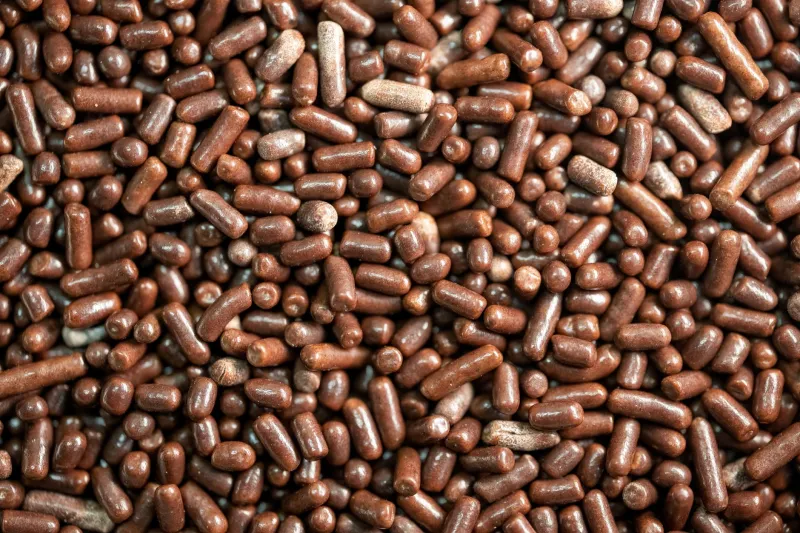
Conventional sprinkles rely heavily on synthetic dyes — FD&C Red 40, Yellow 5, Blue 1 — which are inexpensive, stable, and produce vivid, consistent results. They work. But a growing segment of the premium market has moved toward natural colorants, and producing those is genuinely complicated.
"Natural pigments are finicky," explained Dr. Simone Aldrich, a food scientist who has worked with several specialty confection brands. "They're sensitive to heat, light, and pH in ways that synthetic dyes simply aren't. Getting a stable, vibrant red from beet extract or a true blue from butterfly pea flower without it fading or shifting during processing — that's a real technical challenge."
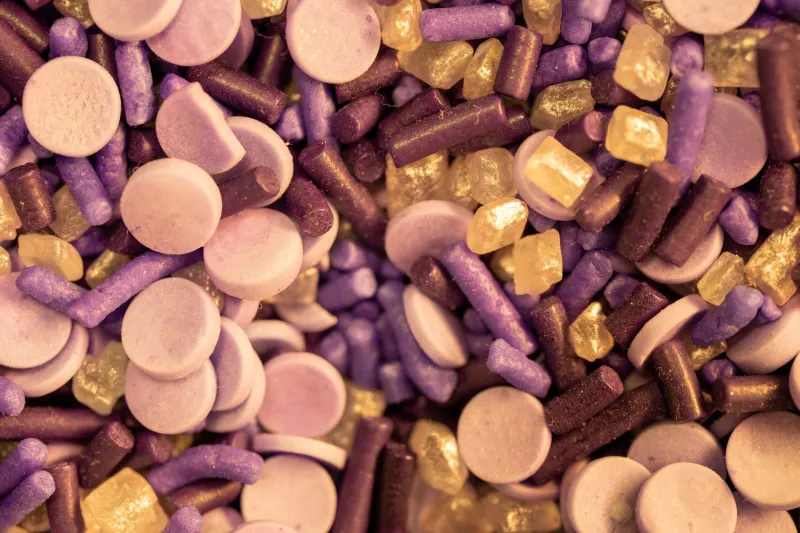
The sourcing side adds another layer. Spirulina for blue-green tones, turmeric for gold, hibiscus for pink-red — these ingredients have to be food-grade, often certified organic, and sourced from suppliers who can guarantee consistency batch to batch. That kind of supply chain doesn't come cheap.
Edible Gold: Not a Gimmick
If natural colorants are where the science gets interesting, edible gold leaf is where the certification conversation gets serious.
Actual edible gold — the kind used in legitimate luxury confections — is 22- to 24-karat gold that has been processed to food-safe standards. In the US, it falls under FDA guidelines as a color additive, and genuine edible gold carries specific certifications to distinguish it from decorative (non-food-grade) gold that is absolutely not meant for consumption.
"There's a real quality spectrum here," said one specialty ingredient supplier who asked to remain anonymous. "Genuine edible gold leaf from reputable European manufacturers — particularly Italian and German producers — goes through rigorous testing. The cheap stuff you find on some platforms? It may not meet US food safety standards at all."
The price difference reflects this. A single sheet of certified edible gold from a reputable supplier can cost several dollars. When you're talking about a jar of decorations containing multiple gold elements, the math adds up fast — and that's before labor, packaging, or brand margin.
Lab-Grown Flavors and the Frontier of Edible Decoration
Here's where things get genuinely futuristic. A small but growing number of artisan confection producers are incorporating lab-grown flavor compounds — molecules that are chemically identical to their natural counterparts but produced through fermentation or biosynthesis rather than traditional extraction.
The appeal is consistency and sustainability. Natural vanilla extract, for example, is subject to significant price volatility based on crop yields in Madagascar. Lab-grown vanillin (the primary flavor compound in vanilla) can deliver a stable, identical flavor profile without the supply chain risk.
"The flavor science community has come a long way," Dr. Aldrich told us. "We can now produce flavor compounds at a molecular level that are indistinguishable from naturally derived versions — and in some cases, they're actually cleaner because you're removing the variability that comes with agricultural production."
For artisan producers, this opens up creative possibilities that simply didn't exist a decade ago. Flavor profiles that would have been prohibitively expensive to source naturally — real saffron notes, specific varietal fruits, obscure botanicals — become achievable at small-batch scale.
The Texture Question
Flavor and color get most of the attention, but texture is arguably where premium sprinkles and edible decorations earn their keep most directly.
The signature crunch of a high-quality sugar pearl, the specific give of a well-made chocolate crispy, the way a premium nonpareil dissolves without leaving a waxy residue — these are engineering problems as much as culinary ones.
Achieving consistent texture in small-batch production requires precise control over crystallization, moisture content, and coating processes. Mass manufacturers achieve this through industrial-scale equipment that averages out variability. Small producers have to nail it through formulation and process control, which takes time, testing, and expertise.
"Every batch is a negotiation," said one small-batch producer based in Portland. "Temperature in the room matters. Humidity matters. You're making micro-adjustments constantly."
Certifications: The Other Price Driver
Beyond ingredients and process, certifications add meaningful cost to premium edible decorations — and they're not optional for the producers who want to sell to certain markets.
Kosher certification, gluten-free verification, organic certification, non-GMO verification — each of these requires ongoing third-party auditing, facility inspections, and documentation. For a small operation producing specialty products, these costs represent a significant percentage of overhead.
But for consumers with dietary restrictions or values-based purchasing habits, these certifications aren't just paperwork — they're the whole point. A kosher-certified edible decoration isn't interchangeable with an uncertified one for a meaningful portion of the market, and the producer who can offer that certification has done real work to earn it.
So Is It Worth It?
That depends entirely on what you're making and why.
For a casual Tuesday batch of birthday cupcakes? Grocery store sprinkles are completely fine. Nobody is judging you. But for a wedding cake, a specialty gift box, a high-end custom order, or anything where the decoration is part of the product's story — the premium tier earns its price in ways that are now, hopefully, a little clearer.
The $45 jar isn't a luxury tax. It's a natural colorant sourcing premium, a certification overhead, a small-batch texture engineering cost, and the work of producers who care about what's actually in the jar.
Which, when you put it that way, sounds like a pretty reasonable trade.