Childhood on a Fancy Plate: How Fine Dining Fell in Love With Sprinkles
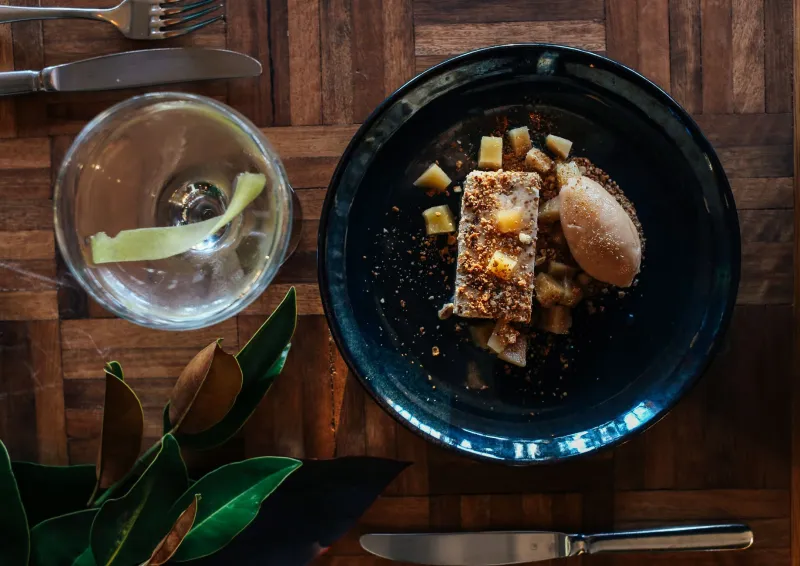
Imagine sitting down at a restaurant where the tasting menu runs $175 a person, the lighting is impeccable, and the sommelier has been speaking quietly about terroir for the last twenty minutes. Then dessert arrives. And it has sprinkles on it.
Not as a joke. Not as a wink. As a choice — a deliberate, considered, technically precise choice made by a James Beard-nominated pastry chef who spent three weeks developing the dish.
This is happening. Across the country, in cities from New York to Los Angeles to Nashville to Chicago, fine dining's dessert programs are incorporating elements that would have felt out of place — even embarrassing — in those same kitchens a decade ago. Sprinkles. Cereal milk. Candy bar components. Freeze-dried gummy bears. Birthday cake flavors rendered in $18-a-scoop artisan ice cream.
And the people ordering these things aren't doing it ironically. They're doing it because it's delicious, emotionally resonant, and — when it's done right — genuinely sophisticated.
The Psychology of Eating Backward in Time
There's a well-established body of research on nostalgia eating — the phenomenon where foods associated with childhood memories trigger measurable emotional and physiological responses. Studies consistently show that nostalgic food experiences reduce feelings of loneliness, increase feelings of social connectedness, and can even make food taste better by activating positive memory networks alongside taste perception.
That's not just warm-fuzzy psychology. It's a concrete sensory effect. When you eat something that triggers a strong positive memory, your brain is essentially layering two experiences simultaneously — the present taste sensation and the emotional memory — in a way that amplifies the overall pleasure response.
Pastry chefs, even those who couldn't cite the neuroscience, have been intuiting this for years. "There's something that happens when a guest recognizes a flavor from their childhood," says a pastry chef at a tasting-menu restaurant in San Francisco. "They soften. Their shoulders drop. It creates a kind of trust that makes everything that comes after land better."
That emotional accessibility is increasingly valuable in fine dining, where the experience can sometimes feel alienating or intimidating. A dessert that references something familiar — even if it's technically elaborate — invites the diner in rather than asking them to decode it.
What 'Elevated Nostalgia' Actually Looks Like
The phrase "elevated nostalgia" gets thrown around a lot, but it's worth getting specific about what it means in practice — because the execution is where this concept either becomes genuinely interesting or collapses into gimmick.
At its best, elevated nostalgia dessert work involves taking the emotional core of a childhood food — the specific combination of sweetness, texture, and sensory memory — and rebuilding it with premium ingredients, refined technique, and a level of precision that the original never had.
Consider the birthday cake. As a childhood memory, it's about that specific flavor combination: vanilla cake, sweet frosting, waxy candles, and — crucially — sprinkles. The sprinkles aren't incidental. They're part of the birthday cake gestalt. Remove them and something essential is missing.
A fine dining interpretation of birthday cake doesn't just slap grocery-store jimmies on a fancy vanilla tart. It might use house-made naturally colored sugar confetti, scattered with intention over a precisely calibrated vanilla bean custard, with a component that delivers that slight waxy-sweet quality of birthday candle smoke through the use of a smoked vanilla or beeswax element. Every reference is there — but rendered with care and craft.
"The sprinkles have to earn their place," says a New York-based pastry chef whose dessert menu regularly features candy-inspired elements. "If they're just there for nostalgia points, a smart diner will feel that. They have to be doing something — texture, flavor, visual rhythm on the plate."
The Ingredient Upgrade That Changes Everything
One reason this trend has legs in fine dining — rather than feeling like a passing novelty — is that the artisan sprinkle and specialty topping market has matured to the point where genuinely high-quality, flavor-forward options exist.
A pastry chef working with freeze-dried passion fruit pieces, house-made popping sugar, single-origin cacao nib sprinkles, and hand-dusted luster finishes is working with a fundamentally different palette than the grocery-store bulk bin. The ingredient quality supports the price point and the culinary ambition in a way that simply wasn't possible even five years ago.
This is part of why the artisan confectionery world and the fine dining world are increasingly in conversation. Small-batch sprinkle makers are getting calls from Michelin-starred restaurants. Custom topping blends are being developed in collaboration between pastry teams and specialty producers. The supply chain between artisan candy makers and high-end kitchens is shortening.
"I work with two small producers to develop toppings specific to dishes on our menu," says a pastry chef at a Chicago restaurant. "One makes us a custom smoked salt and caramel sugar crumble. Another does a house blend of citrus-forward nonpareils for our citrus program. It's a collaboration, not just a purchase order."
The Conversation This Trend Is Opening Up
Beyond the plates themselves, there's a broader cultural conversation happening here that's worth naming.
For decades, fine dining operated on an implicit hierarchy: complex is better, refined is better, European technique is better, childhood is something to be left behind. The best food was food that signaled sophistication — that demonstrated how far you'd traveled, literally or metaphorically, from the kid eating birthday cake in a paper hat.
The nostalgia dessert trend pushes back on that hierarchy in an interesting way. It suggests that emotional resonance is a legitimate form of culinary value. That joy — uncomplicated, unguarded, genuine joy — is something a $175 tasting menu should be able to deliver. And that the foods we loved as children aren't lesser for being simple; they're powerful for being foundational.
There's also something democratizing about it. A dessert that references a birthday cake or a childhood candy bar meets the diner somewhere they've actually been, rather than asking them to acquire new cultural capital to appreciate it. That's not dumbing down. That's meeting people where they are.
Where This Goes Next
The pastry chefs we spoke with are almost uniformly bullish on where this space is heading. Expect more cross-category dessert work — savory nostalgia elements appearing in sweet contexts, regional childhood food memories showing up in tasting menus, and increasingly collaborative relationships between fine dining kitchens and artisan confectioners.
There's also a growing interest in personalized nostalgia — dessert experiences that allow diners to specify a flavor memory and receive something built around it. A few high-end establishments are already experimenting with this at the table.
And sprinkles? They're not going anywhere. If anything, the fact that they're showing up on the most ambitious dessert menus in the country is the clearest possible signal that their cultural moment has fully arrived.
As one pastry chef put it: "Sprinkles are joy in physical form. Why would fine dining want to be a place where joy isn't allowed?"