Four A.M. Sugar and the Last Sale of the Night: One Day Inside a Small-Town Candy Shop
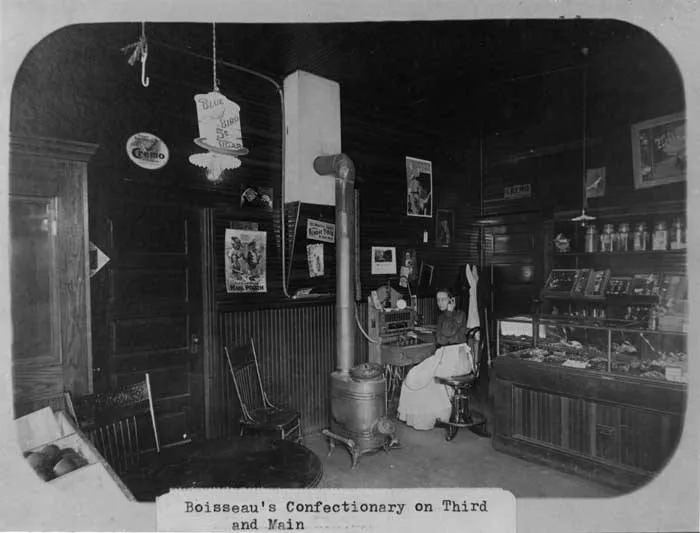
Photo: Unknown authorUnknown author, Public domain, via Wikimedia Commons
The thermometer reads 300 degrees and it's still dark outside. Inside the kitchen of Hartwell's Confectionery, the owner is watching a copper pot of sugar syrup the way other people watch a sleeping baby — with total, anxious attention.
"Two degrees too hot and it's candy. Three degrees past that and it's a science experiment," she says, pulling the pot off the flame at exactly the right second. It's 4:40 a.m. The shop doesn't open for another seven hours.
This is the invisible half of every small-town candy store: the part customers never see and big-box competitors never have to do.
The Chemistry Starts Before the Coffee Does
Sugar work is unforgiving. There's a reason confectionery sits at the intersection of cooking and chemistry — sugar syrup moves through distinct stages (thread, soft ball, hard crack) and each stage is a precise temperature with a precise window. Miss it, and a whole batch goes to the scrap bucket.
For an independent shop, every failed batch stings twice: once in wasted ingredients, once in margin. Sugar, corn syrup, cream, butter, quality chocolate — costs on nearly all of it have climbed double digits in recent years. A big retailer absorbs that. A two-person shop recalculates.
By 6 a.m., the morning's pulls and brittles are cooling on marble slabs, the fudge is in its set, and the chocolate tempering machine is humming. Tempering — the careful melting and cooling that gives chocolate its snap and shine — is pure food science, crystal structure management disguised as cooking. Get it right and the chocolate gleams. Get it wrong and it blooms gray and chalky. There are no half measures.
Ten O'Clock: The Doors Open, the Math Begins
At 10 a.m., the flip of the sign starts the retail half of the day, and the shop transforms into something the chains can't replicate: a third place.
The regulars arrive in waves. The retired men who come for cinnamon hard candies and stay for twenty minutes of gossip. The mom who buys a quarter pound of chocolate-covered almonds every Friday — "same as always" — and has for eleven years. The kid clutching three dollars like a fortune, carefully choosing between gummy bears and rock candy.
"That's the whole business model," the owner says after the lunch rush thins out. "The big stores can sell a bag of candy cheaper than I can buy the ingredients. I can't win on price. I win on this." She gestures at the counter, the hand-dipped boxes, the regulars who call her by name.
Loyalty, it turns out, is a real financial instrument. She estimates her top hundred customers account for a startling share of monthly revenue. Every one of them is a relationship, maintained one quarter-pound at a time.
The Afternoon Reckoning
Around 3 p.m., there's a quiet moment with the invoice folder open: a supplier letter announcing another price increase on cocoa. She does some quick arithmetic, sighs, and makes the decision every independent shop owner dreads — hold the price another month and eat the difference.
It's a decision the big boxes never face. Their buyers negotiate from scale; her supplier is a small family outfit she refuses to abandon, even though a national distributor quoted her less. "They've sold to me for twenty years," she shrugs. "You don't switch on a dime for a nickel."
That's not how the spreadsheet says to run a business. It's exactly how you keep a community's trust for two decades.
Eight O'Clock: The Last Sale
The evening wind-down has its own rhythm. Restock the case, wipe the marble, tally the register. At 7:52, the bell over the door rings one last time — a father and daughter, back from her hockey practice, splitting a bag of sea salt caramels. He pays with exact change and tells her the caramels "taste like the ones from when I was a kid."
She locks the door at 8:05, seventeen hours after the first pot went on the stove.
Why It Still Works
Here's what a day inside a shop like this teaches you: the fight against mass-market candy isn't really about candy. It's about what a store can be. A big box store sells sugar at the lowest possible price. A shop like Hartwell's sells chemistry performed by hand at four in the morning, relationships maintained over decades, and a place where a three-dollar allowance still buys a small moment of magic.
The margins are thin and the hours are brutal. But watch that last father-daughter sale walk out the door, and you'll understand why she'll be at the stove again tomorrow at 4 a.m. — watching the thermometer, chasing two perfect degrees.