More Than Just Pretty: The Unexpected Science of Why Sprinkles Make Everything Better
Let's be honest — nobody needs sprinkles. A frosted cupcake is already a cupcake. A scoop of vanilla ice cream doesn't technically require anything on top. And yet, the moment those tiny, colorful cylinders hit the surface of a dessert, something shifts. The treat feels more festive. More intentional. More fun. But why?
As it turns out, the answer isn't just "because they look cute." There's a surprisingly rich body of science — touching on color theory, texture perception, memory, and even emotional psychology — that explains why sprinkles have become a cornerstone of artisanal confectionery culture. And here at Sprinklez Edibles, we figured it was about time someone actually broke it all down.
Color Is the First Ingredient
Before you ever take a bite, your eyes are already eating. Visual cues are the brain's first food signal, and color is the loudest of those cues. Research in the field of sensory science consistently shows that color influences our perception of flavor before taste receptors are even involved.
Dr. Charles Spence, a professor of experimental psychology at Oxford University, has spent years studying how visual presentation affects taste. His work suggests that brighter, more varied color palettes on food items tend to make people rate those items as sweeter and more enjoyable — even when the actual recipe hasn't changed at all.
For sprinkles, this plays out in a really direct way. A white-frosted cake is pleasant. That same cake covered in a rainbow cascade of nonpareils? Your brain starts anticipating something celebratory before the fork even touches the plate. The color variety signals abundance, joy, and — crucially — effort. Someone decorated this. Someone cared.
Artisanal sprinkle makers have leaned hard into this principle. The shift toward natural colorants derived from beet powder, butterfly pea flower, and turmeric isn't just about clean-label ingredients — it's about achieving specific emotional color stories. Deep jewel tones feel luxurious. Pastel palettes feel nostalgic and soft. Metallics feel elevated and special-occasion-worthy.
The Texture Contrast Effect
Here's where things get genuinely fascinating. Texture contrast — the pairing of different mouthfeel sensations within a single bite — is one of the most powerful tools in a confectioner's kit. And sprinkles, for all their tiny stature, deliver a textural punch that's wildly disproportionate to their size.
When you bite into a frosted donut topped with classic jimmies, you're experiencing a soft, yielding base alongside a slightly firm, almost waxy snap from each individual sprinkle. That micro-contrast is, neurologically speaking, interesting to your brain. Sensory variety keeps neural engagement high, which translates directly to the perception of a more satisfying eating experience.
Pastry chef and food educator Marisol Reyes, who teaches at a culinary institute in Chicago, puts it plainly: "Sprinkles solve a texture problem that a lot of bakers don't even realize they have. A perfectly smooth ganache or buttercream is beautiful, but it's texturally monotone. Add a layer of crunch or a slight chew, and suddenly the whole thing feels more complex — more worth eating slowly."
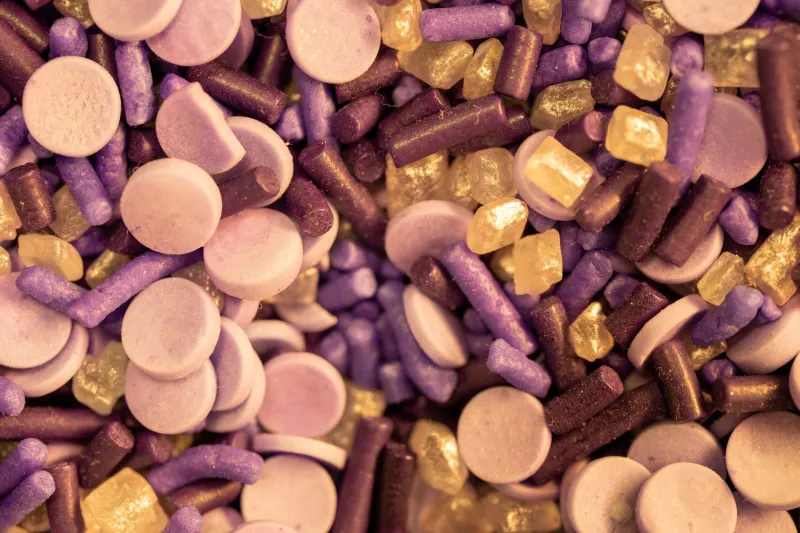
This is why specialty confectioneries have started experimenting with sprinkle formats that go well beyond the standard cylinder. Sanding sugars offer a gentle crystalline crunch. Freeze-dried fruit pieces bring a brittle, airy snap. Edible glitter adds visual shimmer without altering texture at all. Each option is a deliberate sensory choice, not just an aesthetic one.
Nostalgia Is a Real, Measurable Force
Ask almost anyone in the US about their earliest sprinkle memory and you'll get a story. Birthday cake at a school party. Ice cream cones from the truck that came around on summer evenings. Frosted animal crackers from a plastic bag in the backseat of a car. Sprinkles are culturally embedded in American childhood in a way that almost nothing else is.
This matters because nostalgia isn't just a feeling — it's a neurochemical event. Studies in consumer psychology have shown that nostalgic food cues trigger the release of dopamine and serotonin, the brain's reward chemicals, at rates comparable to actually eating something pleasurable. In other words, just seeing sprinkles can make you feel better before you've consumed a single calorie.
For artisan confectioneries, this is both an opportunity and a responsibility. The goal isn't to simply replicate the Rainbow Sprinkles of a 1990s grocery store birthday cake — it's to honor that emotional resonance while elevating the craft. Using higher-quality sugars, more vibrant natural dyes, and more thoughtfully considered color combinations allows makers to hit that nostalgic trigger while delivering something that genuinely tastes and looks better.
The Celebratory Cue
One of the more interesting psychological findings around sprinkles specifically — as opposed to other dessert toppings — is their unique association with celebration. Unlike chocolate shavings or a dusting of powdered sugar, sprinkles carry an almost universal cultural signal: this is a special occasion.
Researchers studying food rituals have noted that toppings which require deliberate application (as opposed to, say, a simple dusting) signal effort and intentionality to the recipient. When someone hands you a cupcake with carefully applied sprinkles, there's an implicit message: I did something extra for you. That social signal has real emotional weight.
This is part of why sprinkles have become so central to the gifting culture around artisanal treats. A beautifully sprinkled confection doesn't just taste good — it communicates something. It's a tiny, edible gesture of care.
Why This All Matters for Artisan Makers
Understanding the science behind sprinkle magic isn't just an academic exercise. For small-batch confectioneries and home bakers alike, it's a practical toolkit. Color choices are flavor cues. Texture variety keeps eaters engaged. Nostalgia builds emotional connection. And celebratory signaling turns a treat into a moment.
At Sprinklez Edibles, we've always believed that the details matter — that the tiny, shimmery, colorful things are never really just decorations. Now we've got the science to back it up.
So next time someone tells you sprinkles are just for kids, feel free to hit them with a brief lecture on dopamine, sensory contrast, and color psychology. Or just hand them a cupcake and let the sprinkles do the talking.