Toppings as Flavor Tools: What Pro Confectioners Know That Home Bakers Don't
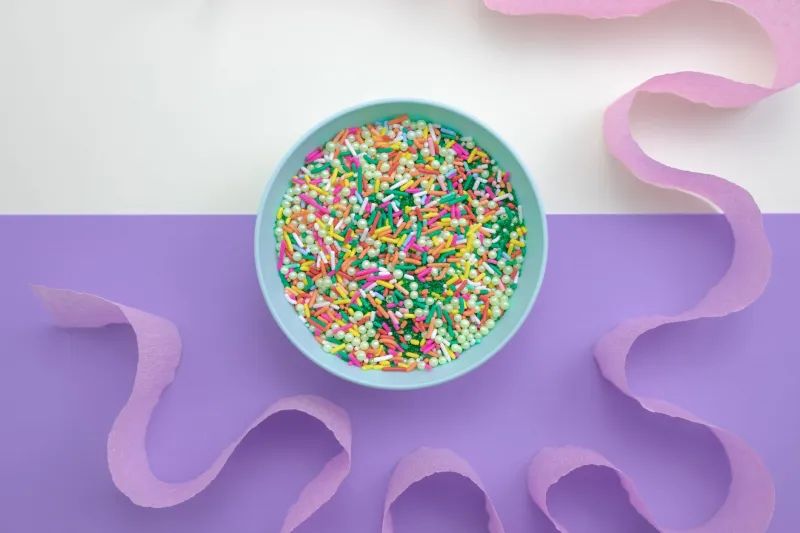
Most of us grab a jar of rainbow jimmies because they're cheerful. Maybe we reach for gold dust because it photographs well. And honestly? No judgment — that's a totally valid reason to use a topping. But if you've ever bitten into a beautifully decorated cupcake and felt like something was almost there, flavor-wise, there's a good chance the toppings weren't doing their job.
Professional confectioners think about sprinkles the way a sommelier thinks about wine pairings. Texture, acidity, sweetness level, fat content, finish — all of it factors in before a single sugar pearl hits the frosting. We dug into the sensory science behind topping selection and talked to people who do this for a living, so you can bring some of that magic home.
It Starts With the Base Flavor Profile
Before you ever open a jar, the most important question is: what is your dessert actually doing on your palate?
Is it rich and fatty — like a dark chocolate ganache tart or a brown butter blondie? Is it bright and acidic, like a lemon curd cake or a passion fruit mousse? Is it warm and spiced, like a chai-infused cookie or a cardamom pound cake? Each of those profiles needs something different from a topping — and the mistake most home bakers make is treating all desserts the same.
"I think of toppings in three roles," says one pastry chef who runs a boutique confectionery in Nashville. "They can echo the flavor, contrast it, or interrupt it in a way that creates excitement. The worst thing a topping can do is just... sit there."
That philosophy is worth sitting with. Your toppings should be active participants in the eating experience, not just decoration applied after the real work is done.
When You Want to Echo: Reinforce What's Already There
Some desserts have a flavor so precise and intentional that the best topping strategy is to amplify it. Think of this as the "yes, and" approach.
For a deeply chocolatey dessert — say, a flourless chocolate torte or a fudgy brownie — cacao nibs, dark cocoa-dusted sugar pearls, or even a light scatter of espresso-flavored sprinkles can deepen that bitterness in a way that feels intentional rather than redundant. The topping becomes a kind of flavor footnote that says we meant this.
Freeze-dried fruit is an incredible echo tool for fruit-forward desserts. Freeze-dried raspberry pieces on a raspberry buttercream don't just add visual pop — they deliver a concentrated, almost jammy burst of the same flavor the cake is already building. It's layering, not repeating.
"Freeze-dried strawberry on a vanilla shortcake is a cheat code," admits a confectioner based in Portland who specializes in artisan candy bars. "You're not changing the dessert's direction — you're just turning up the volume on the fruit note that was already there."
When You Want to Contrast: The Magic of Opposition
This is where things get genuinely exciting, and where most home bakers have the most untapped potential.
Contrast pairings work because our palates are wired to respond to tension. Sweet and salty. Creamy and crunchy. Rich and acidic. When a topping introduces something the dessert doesn't already have, it creates a moment of surprise that makes the whole thing more memorable.
Pop rocks — yes, the candy — have become a legitimate tool in the professional confectioner's kit precisely for this reason. On a silky milk chocolate bonbon or a panna cotta, that fizzing texture interrupts the smoothness in a way that's genuinely delightful. It's not gimmicky when it's purposeful.
Flaky sea salt sprinkled over caramel-dipped apples or salted pretzel pieces folded into a topping blend on a butterscotch cake — these are contrast moves that balance sweetness and prevent flavor fatigue. Your palate doesn't get bored because something keeps shifting.
For acidic desserts like citrus tarts or yuzu cheesecake, a topping with a neutral-sweet or mildly fatty quality — think white chocolate curls or toasted coconut flakes — can soften the sharpness without erasing it. The contrast here is textural and flavor-based.
Metallic Dusts, Luster, and the Flavor Illusion
Here's something that surprises a lot of people: edible metallic dusts don't really have a flavor of their own, but they influence how we perceive flavor. Research in sensory psychology has consistently shown that visual cues shape taste expectations — and gold or copper luster on a dessert primes the brain for richness.
That's not a trick. It's just how human perception works. A gold-dusted chocolate truffle tastes richer to most people than an identical undusted one, even in blind tests. Professional confectioners use this deliberately.
"I use gold dust on anything where I want the customer to expect depth before they even take a bite," says a Chicago-based pastry chef. "It sets an intention. The dessert has to deliver, but the dust gets the story started."
Silver and pearl luster, by contrast, tend to read as cooler and lighter — making them a good pairing for floral or delicate flavors like lavender, rose, or elderflower.
A Practical Pairing Guide for Home Bakers
Ready to apply this at home? Here's a quick-reference framework to get you started:
Rich chocolate or coffee desserts: Cacao nibs, espresso sugar crystals, flaky sea salt, dark cocoa pearls, gold luster dust
Bright citrus or tropical desserts: Freeze-dried mango or raspberry, citric acid sugar sprinkles, toasted coconut, passionfruit-flavored pearls, silver luster dust
Warm spiced desserts (chai, cardamom, cinnamon): Candied ginger bits, cinnamon sugar crystals, toasted sesame, amber-colored sugar pearls, bronze dust
Vanilla or cream-forward desserts: Floral sprinkles (rose, lavender), rainbow jimmies for brightness, pastel sugar pearls, light gold dust
Caramel or brown butter desserts: Flaky salt, pretzel crumble sprinkles, toffee bits, dark honey crystals
Berry or stone fruit desserts: Freeze-dried fruit pieces, hibiscus sugar, pink or red luster dust, tartaric acid sugar for extra zing
The Texture Dimension You Might Be Ignoring
Flavor is only part of the equation. Texture is flavor's less-celebrated partner, and it matters enormously in topping selection.
A soft, mousse-based dessert benefits from crunch — whether that's a coarse sugar crystal, a feuilletine-style crumble, or a scatter of puffed quinoa coated in chocolate. A dense, fudgy brownie might actually benefit from something smooth and melt-y on top, like a chocolate-coated sugar pearl, so the eating experience doesn't become overwhelming.
Pop rocks, as mentioned, handle textural contrast brilliantly on creamy bases. Dragées (those little silver or gold balls) add crunch and a mild sweetness that's useful on shortbread or sugar cookies where the base is already quite firm — the textural harmony keeps things from feeling monotonous.
Your Toppings Deserve a Promotion
The bottom line? Sprinkles and toppings are ingredients — full stop. They deserve the same thoughtful treatment as your flour, your butter, your extracts. When you start asking "what does this topping do for the flavor?" instead of just "does this look pretty?", your desserts will take a noticeable leap forward.
And honestly, that's kind of the whole Sprinklez philosophy. Every little detail counts. Every element of a great treat should be there for a reason — even if that reason is pure, unabashed joy.