Cookie Dough Dreams and Business Licenses: How Home Bakers Are Building Real Edible Empires
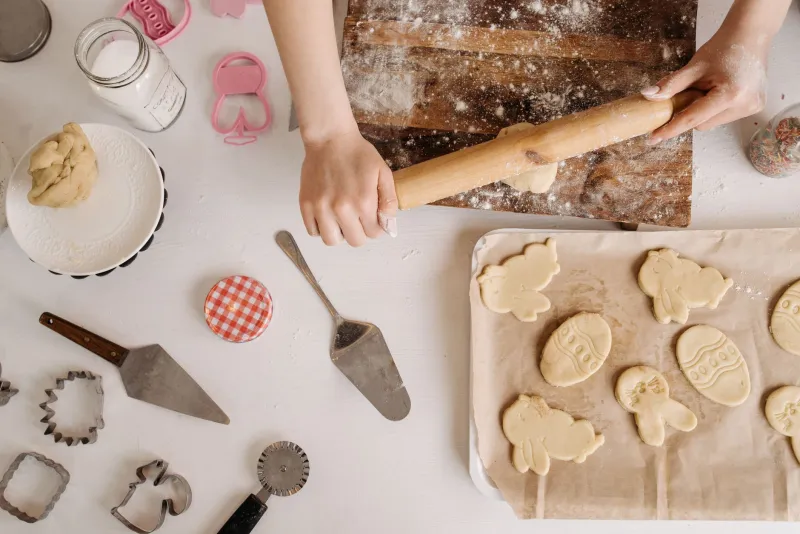
Somewhere right now, a person is standing in their kitchen at 11 p.m., piping royal icing onto their forty-seventh cookie of the night, wondering if this could actually become a real business.
The answer, increasingly, is yes. And the path from that late-night kitchen moment to a legitimate food enterprise is more accessible than it's ever been — but it's also more complicated than most people expect.
We spent time talking with home bakers-turned-entrepreneurs across the country: people who started selling treats from their own kitchens and built something real out of it. Their stories are full of joy, creativity, and an almost universal experience of getting blindsided by paperwork.
The "Why" That Keeps You Going
Before we get into the nuts and bolts, it's worth understanding what drives people to make this leap in the first place — because the "why" matters enormously when things get hard.
For most of the bakers we spoke with, it started with a compliment. Someone tasted their shortbread at a holiday party and said you should sell these. Someone's kid took decorated cookies to school and the teacher texted three times asking where they came from. Someone posted a photo of their hand-painted macarons mostly as a joke and woke up to seventy DMs asking for orders.
"I never thought of myself as an entrepreneur," said one baker based in Nashville who now runs a thriving decorated cookie business. "I just loved making things that made people happy. The business part came because other people wanted in on that."
That pull — the desire to share something you love with more people — is the emotional engine behind most of these businesses. It's also what sustains founders through the genuinely grueling parts of building a food business from scratch.
The Legal Layer Nobody Tells You About
Here's where the reality check comes in. If you want to sell food you make at home, you are operating in a legal landscape that varies enormously depending on where you live.
Cottage food laws — the regulations that govern home-based food production — exist in all 50 states, but they differ wildly in what they allow. Some states let you sell directly to consumers with almost no restrictions. Others cap your annual revenue. Some require a home kitchen inspection. A few prohibit online sales entirely for cottage food producers. And most have specific lists of what products qualify — typically shelf-stable items like baked goods, jams, and candies, while anything requiring refrigeration is often a different regulatory category altogether.
The first thing any aspiring food entrepreneur should do — before buying a single additional piece of equipment — is look up their state's specific cottage food laws. Your state's Department of Agriculture website is the right starting point. Some states have genuinely user-friendly resources; others will require some digging.
Beyond cottage food laws, you'll likely need to think about: a business license (usually through your city or county), a food handler's certification (often a simple online course), liability insurance (yes, even for cookies — especially for cookies), and proper labeling that meets FDA guidelines for allergen disclosure.
This sounds like a lot. It is a lot. But every baker we spoke with said getting the legal foundation right early saved them enormous headaches later.
The Financial Reality of Scaling Up
Let's talk money, because this is where a lot of passion projects stall out.
The economics of artisan food production are genuinely tricky. High-quality ingredients cost significantly more than grocery-store equivalents. Specialty packaging — the branded boxes and tissue paper that make your treats feel premium — adds up fast. And the time cost of handcrafted production is almost always underestimated.
Pricing is one of the most common struggles for new food entrepreneurs. Many home bakers initially underprice their work dramatically, either because they feel guilty charging "too much" or because they're comparing their prices to mass-produced supermarket alternatives. Neither benchmark is appropriate.
A simple formula that food business coaches often recommend: calculate your ingredient cost, multiply by three to cover overhead and labor at a basic level, then add your desired profit margin on top. If that number feels uncomfortably high, the solution isn't to lower your price — it's to understand that artisan products command artisan prices, and your job is to communicate that value clearly.
One Indiana-based confectioner who makes custom celebration cakes told us she tripled her prices eighteen months into her business and lost exactly two clients. "The customers who were right for me stayed," she said. "The ones who left were always the hardest to work with anyway."
For those looking to grow beyond cottage food limits, the next step is typically renting time in a licensed commercial kitchen. Many cities have shared commercial kitchen spaces specifically designed for small food producers — hourly rental rates vary widely by market, but it's a far more accessible entry point than building or leasing your own facility.
Building a Brand That Actually Stands Out
The gourmet treats market is crowded. Instagram is full of beautiful cookies. Etsy has thousands of custom confection shops. Standing out requires more than a good product — it requires a clear identity.
The most successful small food brands tend to have a specific point of view. Not just "decorated cookies" but decorated cookies with a maximalist, jewel-toned aesthetic and a bold personality. Not just "custom cakes" but cakes that tell personal stories, rooted in a specific cultural tradition or family history.
Your brand is not just your logo. It's your voice in captions, your packaging choices, the way you respond to DMs, the behind-the-scenes content you share, and the specific niche you occupy in a crowded market. Narrowing your focus — even when it feels counterintuitive — almost always strengthens a brand.
Social media remains the most powerful free tool available to small food businesses. Consistent posting, authentic personality, and genuine community engagement (responding to comments, supporting other small bakers, sharing your process) build audiences faster than any paid advertising strategy at the small-business level.
The Emotional Weight of Doing What You Love for Money
This part doesn't get talked about enough. Turning a creative passion into a business changes your relationship with that passion. Some days you'll resent the thing you used to love. Some custom orders will drain you completely. Some seasons will be so slow you'll question everything.
Every baker we spoke with had experienced this. And every single one of them also described moments — a customer's message about the birthday cake that made their kid cry happy tears, a first wholesale account, a five-star review that got screenshot and saved — that made it completely worth it.
The advice they gave most consistently: build a support network of other food entrepreneurs. Online communities for cottage food producers and small bakery owners are genuinely helpful, full of people who've navigated the same hurdles and are usually generous with what they've learned.
"Don't try to figure it all out alone," one baker told us. "Someone else has already made the mistake you're about to make. Find them."
Your Next Step
If you're sitting in your kitchen right now wondering whether this could be real — it can be. It takes paperwork and pricing spreadsheets and more late nights than you're probably imagining. But it also takes exactly the thing you already have: a genuine love for making something beautiful and sharing it with people who light up when they taste it.
Start with your state's cottage food laws. Calculate your real costs. Pick a niche that feels authentically yours. And then make the thing, beautifully, and let people find you.
The sprinkles are already in your pantry. The rest is just details.