Sold Out in Three Days: What Really Happens When a Treat Goes Completely Viral
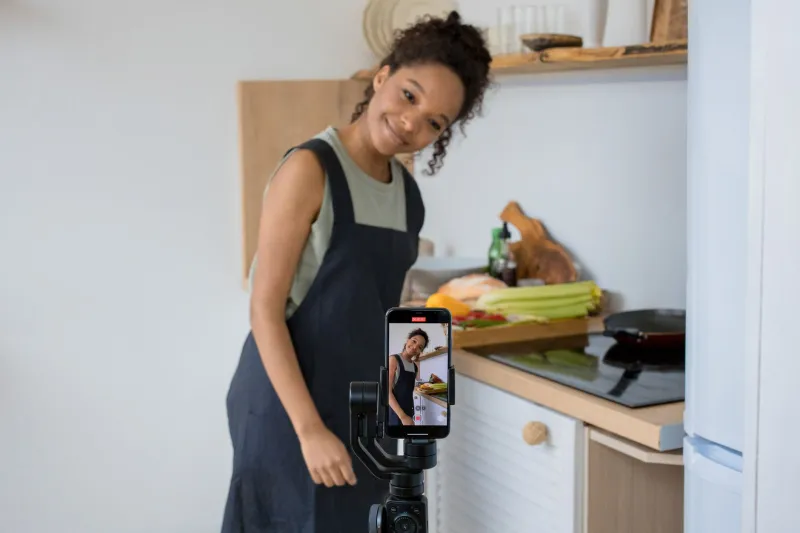
It starts with a sound. That satisfying crinkle of packaging, a slow reveal, maybe a close-up of edible glitter catching light at exactly the right angle. Thirty seconds later, a small confectionery brand that was happily shipping two hundred orders a week is suddenly staring down forty thousand backorder requests and a comment section that will not stop refreshing.
We've all watched it happen. A treat goes viral, the internet collectively loses its mind, and somewhere in a commercial kitchen — or more often a very stressed home bakery — someone is doing frantic math on a whiteboard.
So what actually goes on behind the scenes when a gourmet edible explodes online? We talked to confectioners, boutique retailers, and a few people who manage the unsexy logistics of getting artisan food from a mixer to your mailbox. What they described is equal parts exciting and absolutely chaotic.
The Moment Everything Changes
For most small food brands, virality doesn't announce itself. There's no warning email. One founder we spoke with — who runs a small-batch sprinkle and confection studio out of Austin, Texas — described waking up to a notification that her website had crashed overnight. A creator with just over 400,000 TikTok followers had posted an unboxing of her signature glazed shortbread, set to an audio trend that was already pulling millions of views. By 6 a.m., she had more orders than she'd filled in the previous four months combined.
"I cried," she told us. "And not happy tears at first. I genuinely didn't know if I should be grateful or terrified."
That tension — gratitude tangled up with panic — is practically a rite of passage for artisan food brands riding a viral wave.
What the Algorithm Actually Rewards
Not every beautiful treat gets its moment. Confectioners who've experienced viral spikes will tell you there's a formula, even if it's maddeningly inconsistent.
Food content that performs on TikTok and Instagram tends to share a few traits: it has a strong visual payoff (think: a cookie that transforms under a glaze, or a cake slice that reveals an impossible interior), it triggers an emotional response — nostalgia, wonder, or straight-up FOMO — and it feels scarce. That last part is crucial.
Social media platforms reward content that generates saves and shares over pure likes, and food videos that make viewers think "I need to find this before it's gone" tend to hit both metrics hard. The algorithm doesn't care that you have three hundred units left. It just knows people are engaging at a rate that suggests urgency.
Influencer partnerships amplify this further. Brands that seed product to mid-tier creators — those with 100K to 500K followers — often see better conversion than massive celebrity posts, because the audience trust is higher and the content feels more like a genuine discovery than an ad. "Micro-influencer gifting is where the real magic happens," one digital strategist who works with specialty food brands told us. "A 250K foodie creator can move product faster than a one-million-follower lifestyle account."
The Supply Chain Scramble Nobody Talks About
Here's the part that doesn't make the highlight reel: when demand spikes overnight, the supply chain doesn't magically expand with it.
Artisan food brands face a very specific set of constraints. Specialty ingredients — hand-poured sugar pearls, custom-dyed sprinkle blends, imported flavoring compounds — often have lead times of two to six weeks. Commercial kitchen rental slots don't appear out of thin air. Packaging that matches your brand aesthetic can't be ordered in bulk on a Tuesday and arrive by Thursday.
One confection retailer based in Chicago told us she had to make a painful choice during a viral moment last spring: fulfill existing orders slowly and carefully, or rush production and risk quality slipping. She chose slow and careful. She also chose to be radically transparent about it on her social channels, posting daily kitchen updates and honest timelines.
"People were actually more loyal after that," she said. "They felt like they were part of the story."
That transparency strategy is increasingly common among artisan brands navigating demand surges. It doubles as content, keeps customers informed, and humanizes the business in a way that polished marketing rarely does.
The Psychology of the Waitlist
Here's something wild: selling out can be better for a brand than having unlimited stock.
Scarcity, even when it's accidental, creates perceived value. When something is backordered, it signals that other people wanted it badly enough to wait — and that social proof is enormously powerful. Waitlists generate email addresses, which are far more valuable to a small business than a one-time transaction. And the anticipation of receiving something you've been waiting weeks for amplifies the unboxing experience when it finally arrives, which means more organic content posted by happy customers.
It's a flywheel. Virality creates scarcity. Scarcity deepens desire. Desire generates more content. More content feeds the algorithm. The algorithm brings in new customers who join the waitlist. And the cycle continues.
What Separates a Flash in the Pan from a Real Brand
Not every viral moment translates into lasting business. Confectioners who've ridden the wave and come out stronger on the other side tend to share a few habits.
They use the attention to build community, not just convert sales. They introduce their personalities alongside their products. They're consistent — posting regularly before, during, and after the spike so the algorithm doesn't lose interest. And they treat the viral moment as a beginning, not a destination.
The brands that struggle are often the ones that weren't quite ready — whose packaging wasn't scalable, whose website couldn't handle traffic, or whose product quality dipped under pressure and got called out in the comments.
"Going viral is like getting a pop quiz you didn't study for," one confectioner put it. "If your foundations are solid, you'll pass. If they're not, everyone finds out at the same time."
So, Can You Engineer It?
Everybody wants to know this. The honest answer is: sort of.
You can absolutely stack the deck in your favor. Invest in good lighting and video quality. Participate in trending audio early. Build relationships with creators who genuinely love your product. Make something that has a visual hook — a reveal, a transformation, a texture that reads well on camera. And make sure your checkout process, fulfillment timeline, and customer communication are rock solid before you start pushing for attention.
But the spark itself? That's still a little bit magic. And honestly, for a brand called Sprinklez Edibles, we're pretty okay with that.