The Recipe Card Stays the Same: How Second-Generation Bakers Are Giving Grandma's Cookies a Gourmet Glow-Up
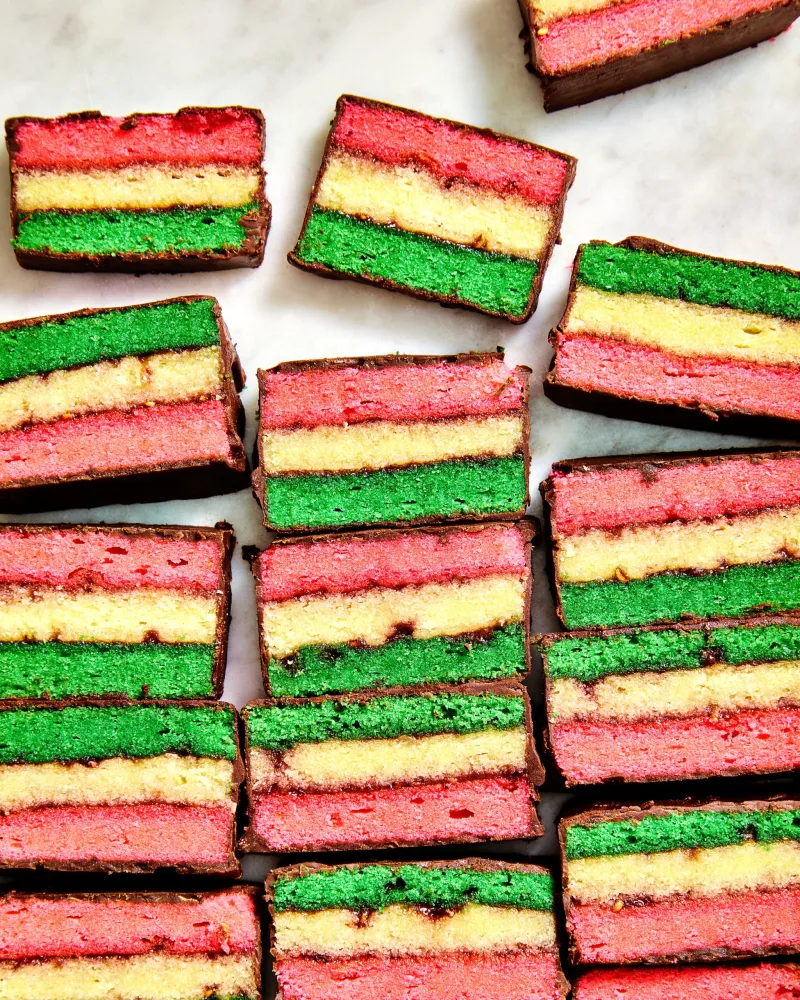
Photo: vintage handwritten recipe card with colorful Italian rainbow cookies, via www.saveur.com
The recipe card is soft at the edges now, the ink faded to a faint brown, flour worked into the paper from decades of use. For a lot of second-generation bakers, that card is the entire business plan.
All over the US, adult children and grandchildren are doing something their grandparents never imagined: taking beloved family dessert traditions and rebuilding them for the specialty food era. Same recipes — mostly. Very different shelf presence.
When 'Good Enough' Becomes the Business Model
Ask these bakers what changed, and the answer is rarely the recipe itself. It's everything around it.
Consider the classic Italian rainbow cookie — that tri-colored almond layer cake with apricot jam and a chocolate shell. A generation ago it came from a neighborhood bakery in a white box tied with string. Today, you'll find upgraded versions at farmers markets and on Instagram: 70% single-origin dark chocolate instead of the waxy coating, natural dyes from beet and spirulina, hand-blended pistachio paste, and — increasingly — a finishing scatter of artisan sprinkles that turn a humble classic into something you'd photograph before biting.
The purists bristle. The customers line up.
"I fought it for years," one second-generation baker told us. "My grandmother's version was perfect. But perfect for 1962 isn't the same as perfect for now. People expect better chocolate, cleaner ingredients, and something that looks as good as it tastes. The soul of the recipe never changed — the standards did."
The Upgrade Hierarchy
Talk to enough of these bakers and a pattern emerges. The reinventions tend to follow a predictable ladder:
- The chocolate swap. This is almost always step one. Replacing commodity chocolate with couverture from a craft maker instantly changes the entire confection.
- The ingredient audit. Artificial flavors and dyes get replaced with real vanilla, fruit powders, and plant-based color. It costs more. Customers notice.
- The finish. This is where the magic happens — flaky sea salt, tempered chocolate drizzles, and those small-batch sprinkles that have become the signature of the artisan treat movement.
- The story. Finally, the packaging and the pitch: Grandma Rose's recipe, remastered.
That last step matters more than any of them expected. In a market flooded with new brands, an authentic family story is the one thing a competitor can't copy.
Nostalgia Is the Product; Craftsmanship Is the Proof
There's a reason these remastered family recipes sell: they hit two desires at once. The taste memory delivers genuine nostalgia — that specific flavor of a childhood kitchen. The elevated execution delivers the quality today's specialty food shopper demands.
But the bakers we spoke with were quick to draw a line. Nostalgia gets a customer's first purchase. Craftsmanship gets the second one. If the upgraded version doesn't genuinely taste better, the story runs out of steam fast.
The ones who succeed treat the original recipe with something close to reverence. They don't reinvent — they refine. The jam ratio stays. The chilling time stays. The weirdly specific instruction to "let it rest overnight, no exceptions" stays, because somebody's grandmother learned that lesson the hard way in 1954.
From Kitchen Table to LLC
The other half of this story is entrepreneurial. Many of these bakers started by selling a few dozen cookies at the holidays, then a cottage-food operation, then — for the ambitious — a licensed commercial kitchen and a real brand.
The learning curve is steep: health department paperwork, shelf-life testing, pricing that actually accounts for $18-a-pound chocolate. But the family recipe provides something no business course can: a reason people root for you. Customers aren't just buying a cookie. They're buying a grandmother's legacy, kept alive by a grandchild with a stand mixer and a shipping account.
Keep the Card, Change the Game
There's something quietly moving about the whole trend. In an era of viral dessert fads that flame out in a season, these bakers are building on foundations poured decades ago. The recipe card stays pinned to the wall — softened, stained, sacred. The chocolate just got better.
Maybe that's the real lesson hiding in all those upgraded rainbow cookies and remastered seven-layer bars: tradition doesn't survive by refusing to change. It survives by letting each generation add a little more love to the mix.